
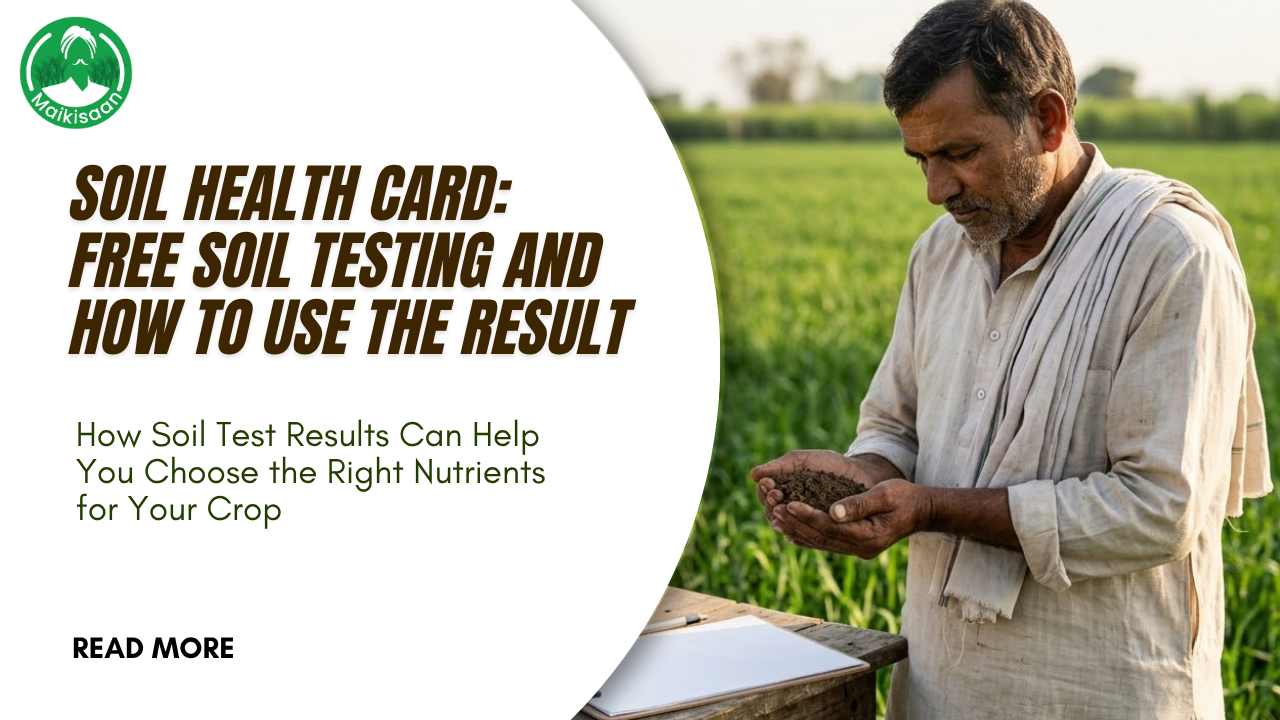
The Soil Health Card scheme provides soil testing and a report showing nutrient status and fertiliser recommendations for your field. Testing is available through state soil testing laboratories and Krishi Vigyan Kendras. The value is in acting on the report — most farmers who test never change what they apply.
Last updated
| Who is eligible | Any farmer with cultivable land. Sampling is organised through state agriculture departments, Krishi Vigyan Kendras and soil testing laboratories. |
|---|---|
| Benefit amount | Soil testing and the resulting card are provided under the scheme. Availability and cycle timing depend on your state and district. |
| How to apply | Contact your local agriculture office, Krishi Vigyan Kendra or soil testing laboratory. They will advise on sampling method and collection points. |
How the sample decides the result
A test is only as good as the sample. Taking soil from one corner of the field, or from a spot where fertiliser was recently spread, produces a report that describes nowhere. Collect from several points across the field, mix, and submit a representative sample as the laboratory instructs.
What the report tells you
The card shows the status of major and micro nutrients and organic carbon, along with recommendations for your crop. The most useful part is usually what it says you do not need — many farmers apply nutrients the soil already has plenty of, which is money spent for nothing.
The saving is in what you stop buying
The common pattern is heavy nitrogen application and neglected potash or micronutrients. Correcting the balance often costs less overall than the previous routine while producing a better crop. That saving is the whole point of testing.
Retest periodically
Soil changes with cropping and fertiliser use, so a report several years old is a poor guide. Testing on the scheme cycle keeps the recommendations relevant to what your field is like now, not what it was like then.
Go to the official government site
Frequently asked questions
- How often should soil be tested?
- The scheme works on a cycle of a few years. If you have changed crops or fertiliser practice significantly, test sooner.
- The report suggests something my neighbours do not do. Should I follow it?
- The report describes your field, not theirs. Soil varies over short distances, which is exactly why testing is worth doing.