
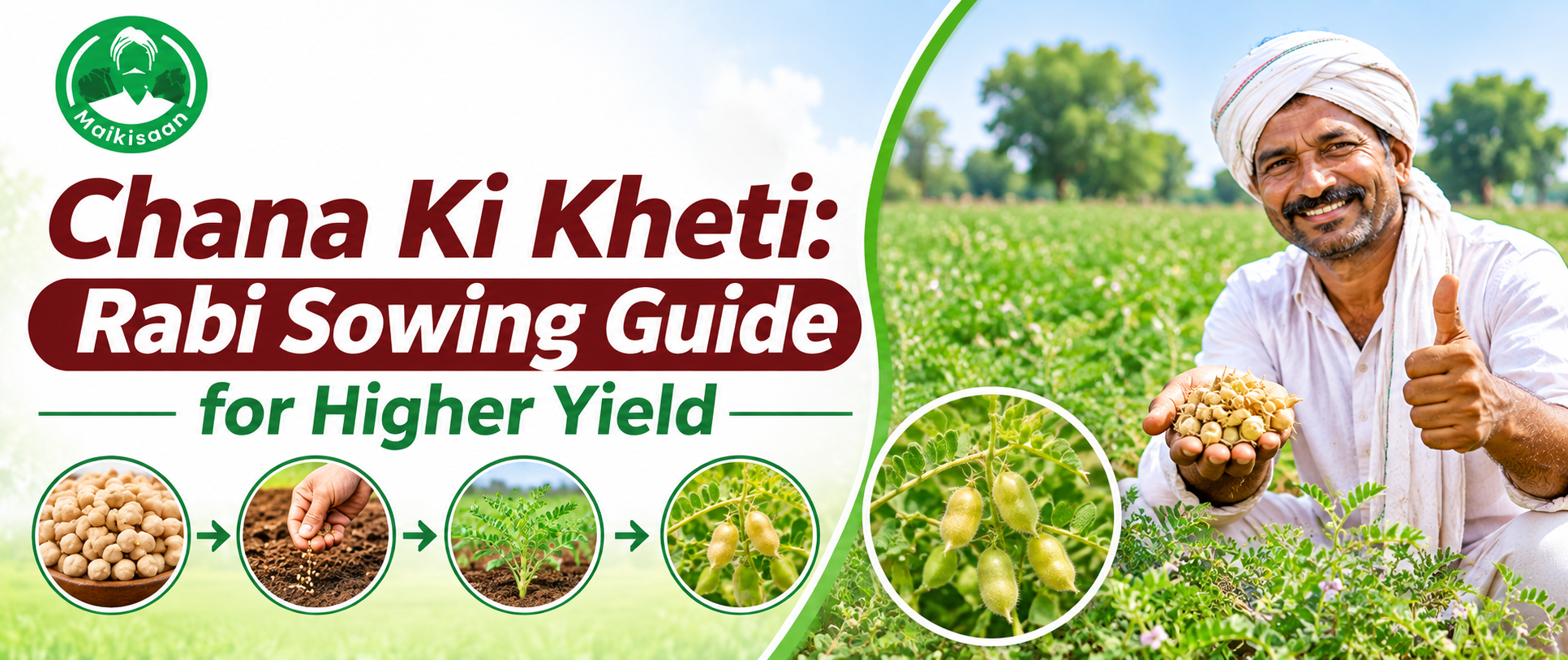
 Kheti How-To · FeaturedChana Ki Kheti: Rabi Sowing Guide for Higher YieldChana (gram) is a major Rabi pulse crop grown in India. For better production, farmers should choose suitable varieties, sow at the right time, use healthy treated seeds, maintain proper spacing, apply balanced fertilizers, manage irrigation carefully and monitor pests and diseases throughout the growing season.25 Nov 2026 · 4 min readRead guide
All Guides
27 guides Kisan Tips10 Checks Before You Take Your Crop to the MandiBefore taking your crop to the mandi, check the latest market rate, MSP where applicable, grain quality, moisture level, required documents, weighing arrangements, deductions, payment terms, buyer offers and transportation costs. These 10 checks can help you avoid common selling mistakes, understand the value of your produce and make a more informed selling decision.20 Nov 2026 · 5 min read
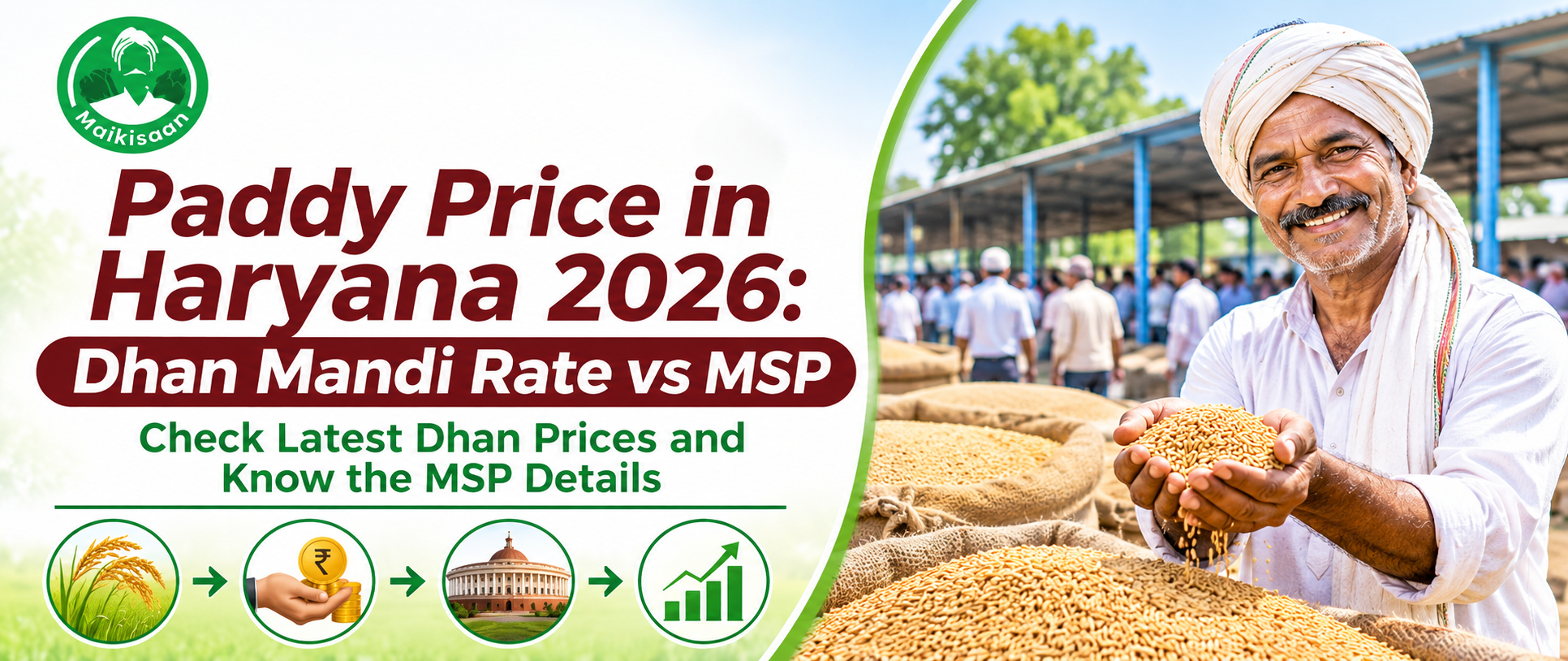 Agri GuidesPaddy Price in Haryana 2026: Dhan Mandi Rate vs MSPThe paddy MSP in Haryana for the 2026–27 Kharif Marketing Season is ₹2,441 per quintal for Common Paddy and ₹2,461 for Grade A. Actual Dhan mandi rates vary by variety, grain quality, moisture and market demand. Farmers should compare the latest mandi prices with MSP before selling.20 Nov 2026 · 7 min read
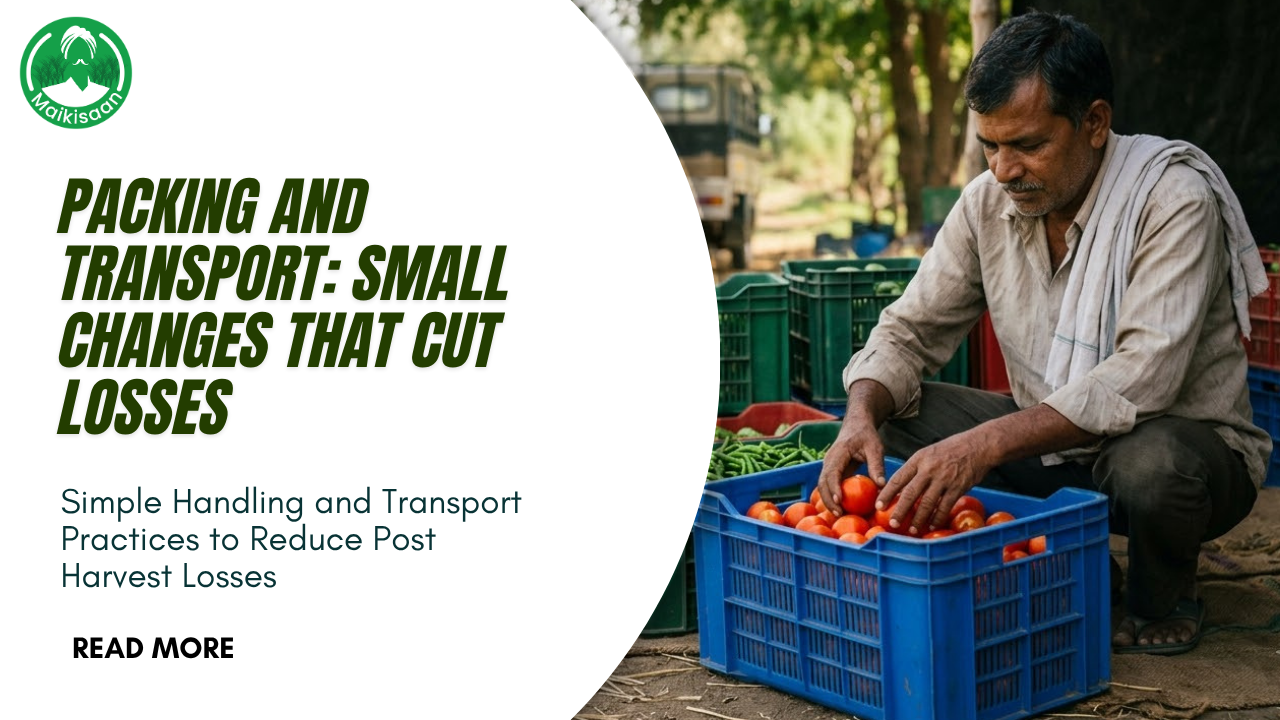 Kisan TipsPacking and Transport: Small Changes That Cut LossesDamage in handling and transport is loss you have already paid to produce. Loading carefully, not overfilling, protecting from sun and rain, securing the load and keeping grades separate all cost nothing but attention, and all show up in the rate.2 Sep 2026 · 1 min read
 Kisan TipsReading a Price Trend Without GuessingA single day's rate is noise. What matters is direction over a couple of weeks, the seasonal pattern for that crop, and whether a move is local or national. Five habits turn scattered daily numbers into something you can plan against.2 Sep 2026 · 1 min read
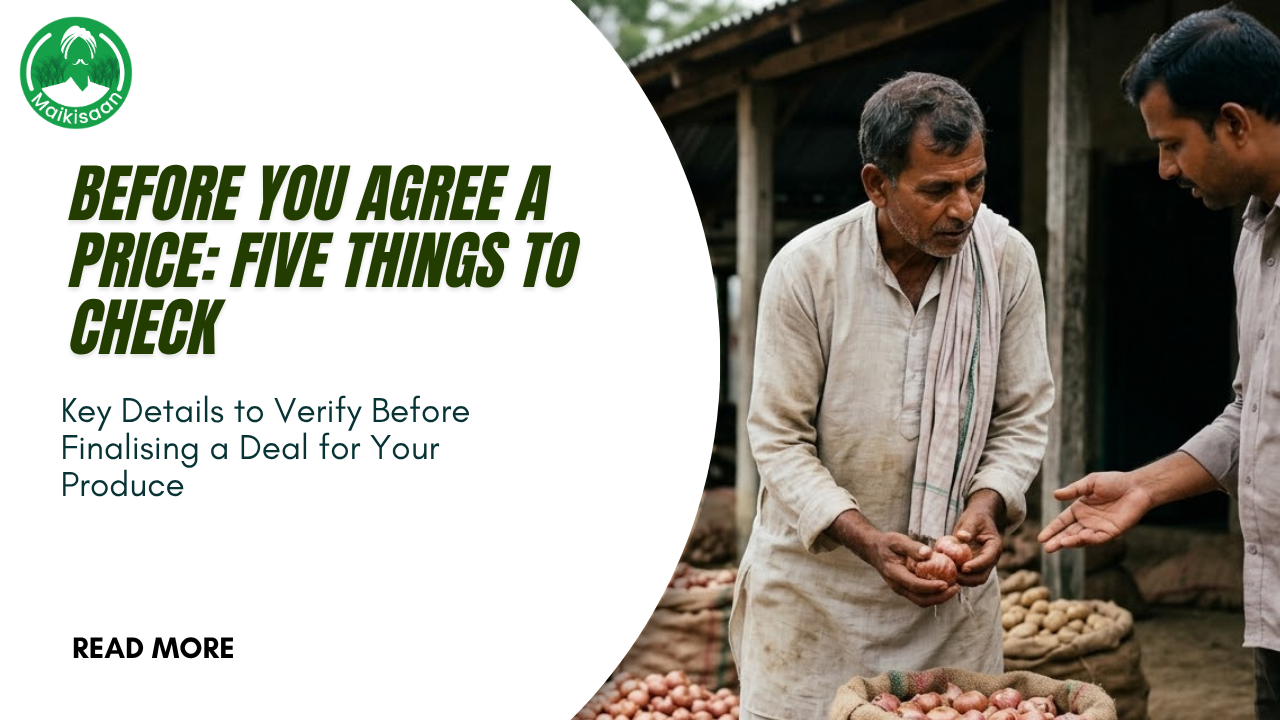 Kisan TipsBefore You Agree a Price: Five Things to CheckA price is not a deal. Before agreeing, confirm the rate against a reference, who pays transport, how quality will be judged, when payment arrives, and what happens if the buyer disputes the grade. Most disagreements are about something that was never agreed rather than something that was broken.2 Sep 2026 · 1 min read
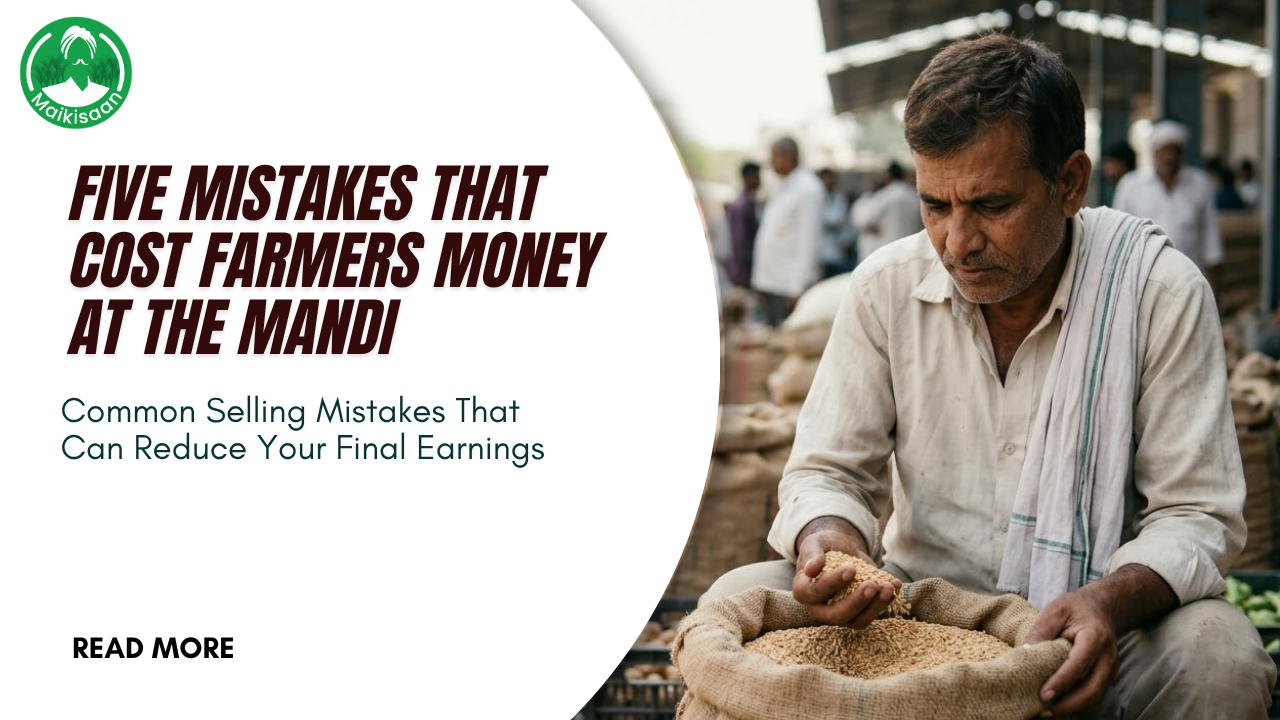 Kisan TipsFive Mistakes That Cost Farmers Money at the MandiMost of what a farmer loses at the mandi is decided before the load leaves the farm. Arriving without knowing the rate, bringing an ungraded load, ignoring moisture, checking only one market, and accepting the first offer are the five that cost the most, and all five are avoidable.2 Sep 2026 · 1 min read
 Agri GuidesFarm Machinery: What to Rent and What to BuyMachinery pays to own when you use it enough days a year to beat the rental cost, including maintenance, depreciation and the capital tied up. Below that threshold, renting is cheaper and carries less risk. Custom hiring centres and shared ownership sit between the two.2 Sep 2026 · 1 min read
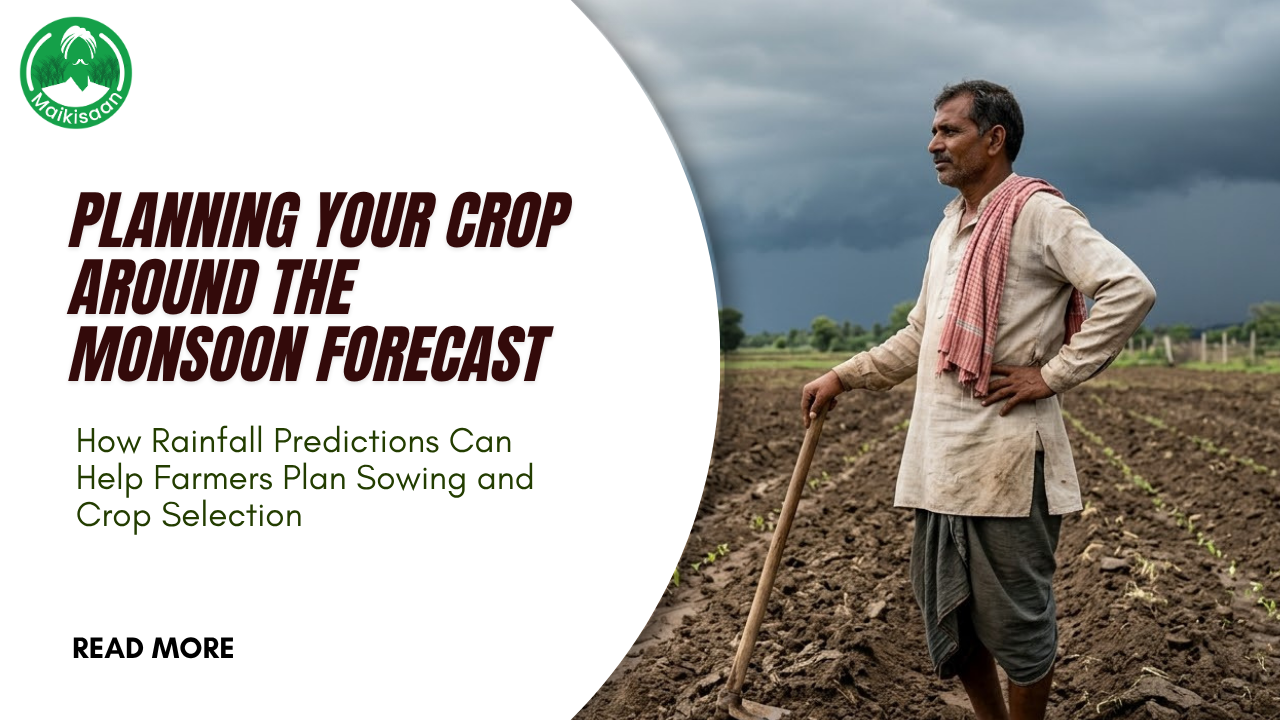 Agri GuidesPlanning Your Crop Around the Monsoon ForecastSeasonal rainfall forecasts give a probability, not a certainty, and they describe large regions rather than your field. Use them to shift the balance of what you plant rather than to bet the whole season. Spreading risk across crops with different water needs is more reliable than trying to predict the rain.2 Sep 2026 · 2 min read
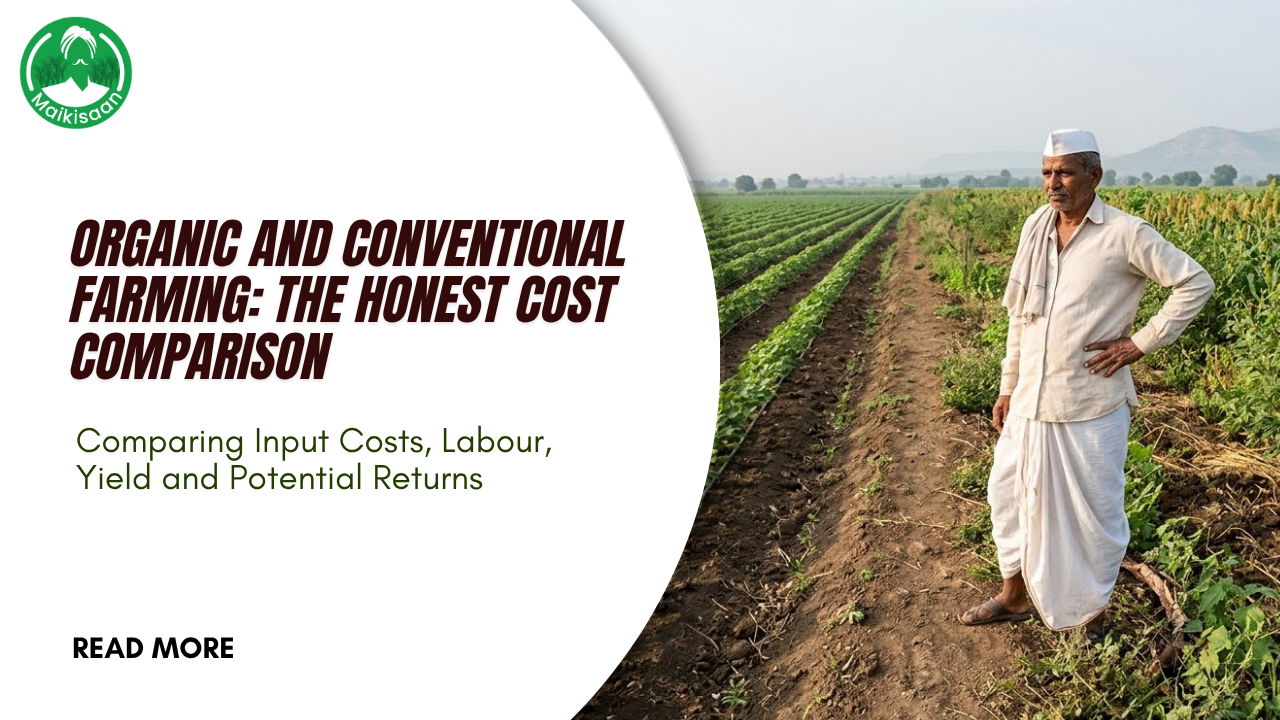 Agri GuidesOrganic and Conventional Farming: The Honest Cost ComparisonOrganic farming usually lowers input cost and lowers yield, at least at first. Whether it pays depends entirely on whether you can reach a buyer who pays a premium, and that generally requires certification. Without a premium market, organic is a lower-cost, lower-output version of the same business.2 Sep 2026 · 2 min read
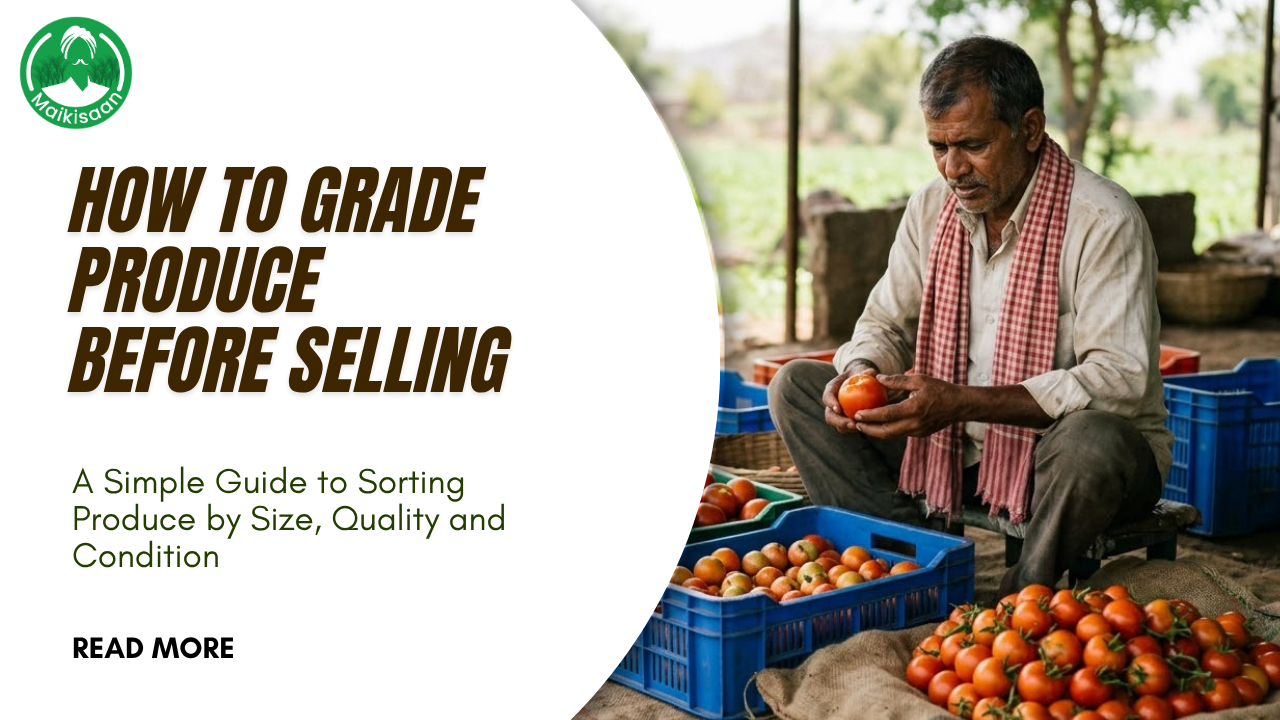 Kheti How-ToHow to Grade Produce Before SellingBuyers price a mixed lot at the level of its worst material, because they have to sort it themselves. Separating your produce into grades before sale means the good part is paid for as good. It costs labour and nothing else, which is why it is usually the highest-return hour of work available on a farm.2 Sep 2026 · 1 min read
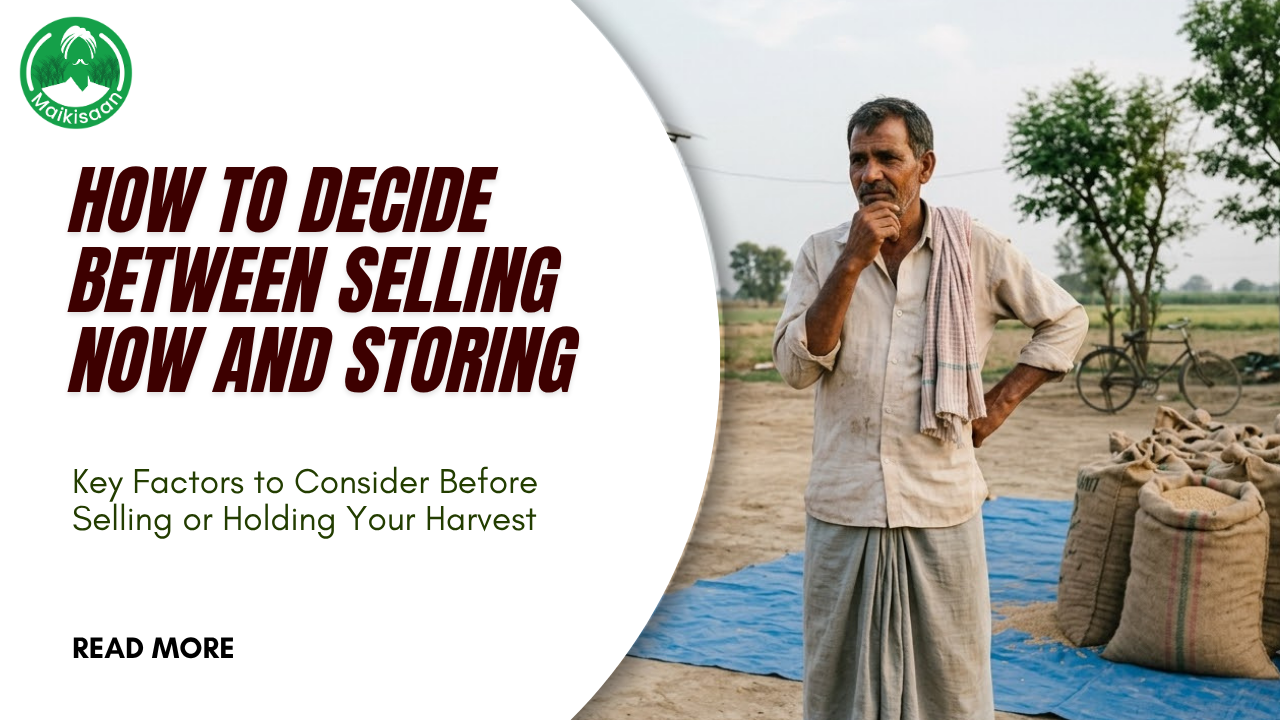 Kheti How-ToHow to Decide Between Selling Now and StoringStoring pays only when the expected price gain beats three things: physical loss in storage, the cost of storing, and the cost of not having the money. Work out each before deciding. For crops that cannot be stored at all, such as tomato or banana, the question does not arise and the decision is about harvest timing instead.2 Sep 2026 · 2 min read
Check today's mandi bhav
Prices for 168+ crops, updated every day after 2 PM.