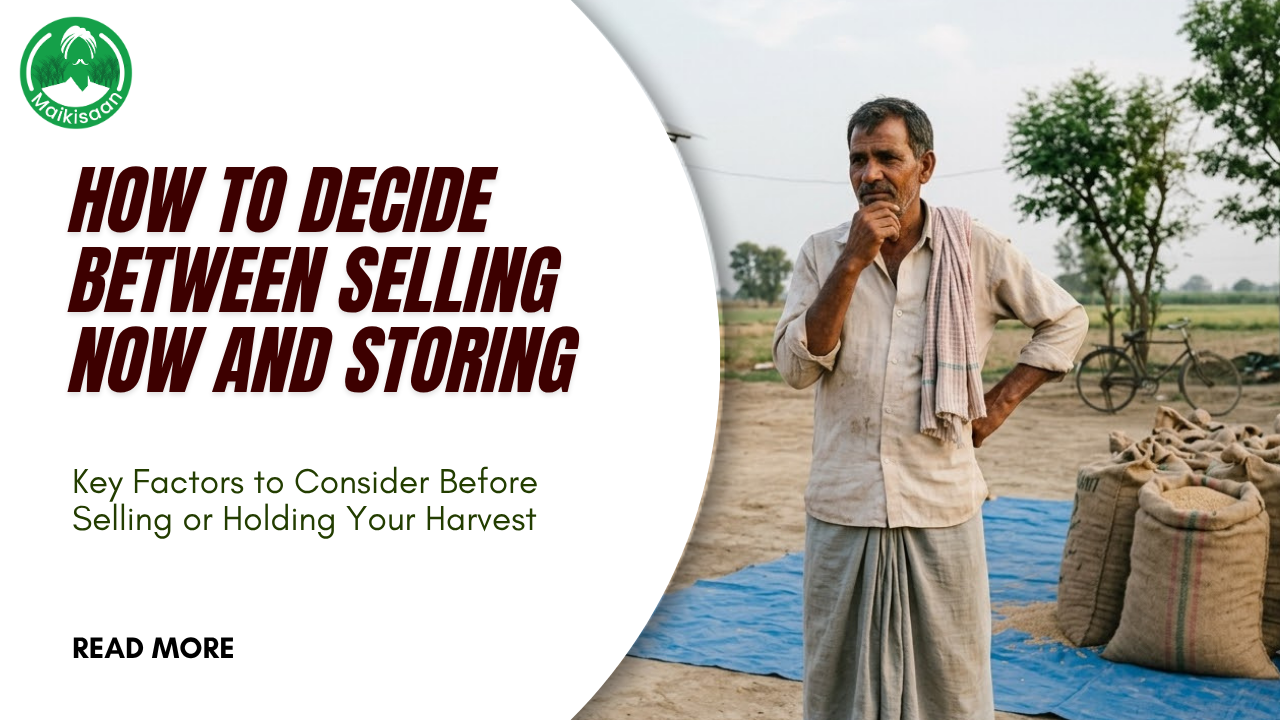
Storing pays only when the expected price gain beats three things: physical loss in storage, the cost of storing, and the cost of not having the money. Work out each before deciding. For crops that cannot be stored at all, such as tomato or banana, the question does not arise and the decision is about harvest timing instead.
What you need
- Today's rate for your commodity
- An honest estimate of your storage loss percentage
- Your cash requirement over the next few months
- Total time
- 30 minutes
- 1
Check whether the crop can be stored at all
Grain, pulses, dried spices and cured onion can wait. Tomato, banana and most fresh vegetables cannot. If the crop cannot be stored, the decision is about when to harvest and who to sell to, not whether to hold.
- 2
Estimate your real storage loss
Be honest about your own storage, not the best case. A shed with poor ventilation loses far more than a good one. Use what actually happened to you last year as the number, not what should happen in theory.
- 3
Add up the cost of storing
Bags, shed rent or maintenance, labour for sorting, and any treatment. These are small per quintal but they are real, and they come out of the gain you are chasing.
- 4
Count the cost of waiting for the money
If you have an input bill, a loan repayment or a family expense due, money in hand now is worth more than a higher number later. Farmers who borrow to bridge the wait often lose more in interest than they gain in price.
- 5
Compare against the seasonal pattern
Look at how the rate has moved over the same months in previous years. A crop with a reliable seasonal rise justifies storage more than one that moves unpredictably.
Frequently asked questions
- How much price rise justifies storing?
- Enough to cover your storage loss, your storage cost and the value of waiting for the money. If the expected rise is smaller than the sum of those three, sell.
- Can I store part and sell part?
- Yes, and it is often the sensible answer. Selling enough to cover immediate needs and storing the rest limits the downside either way.