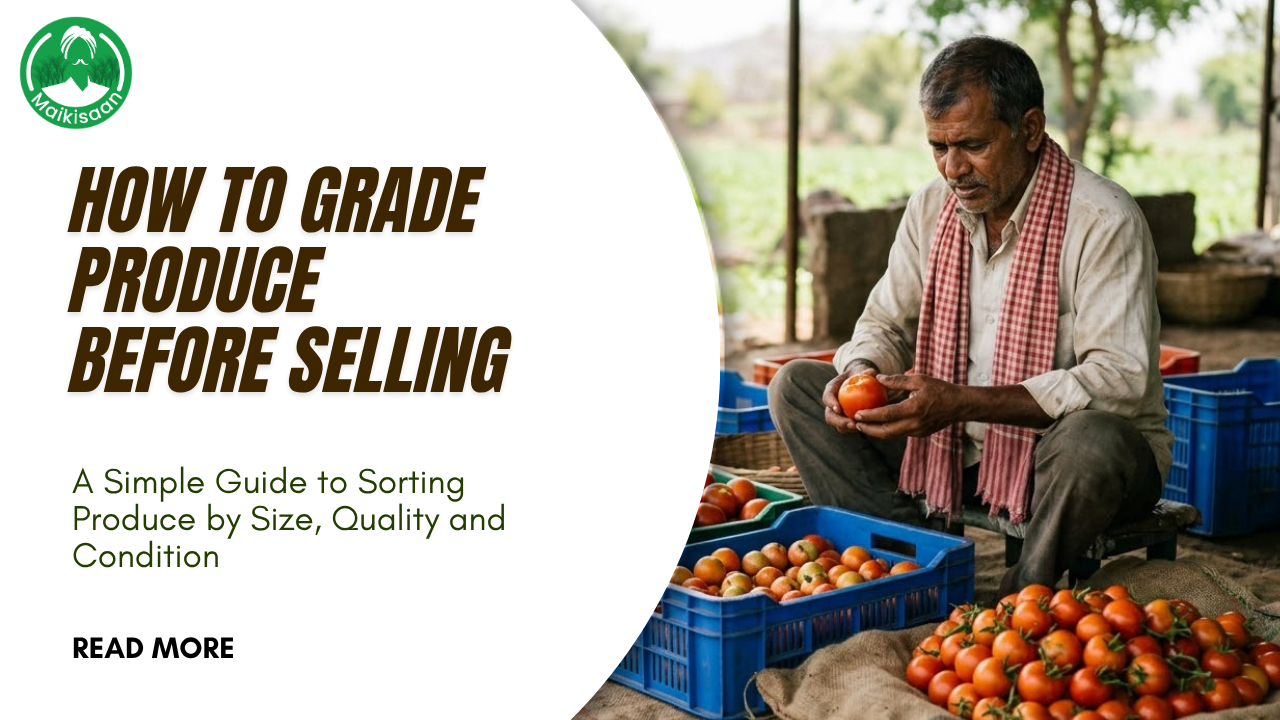
Buyers price a mixed lot at the level of its worst material, because they have to sort it themselves. Separating your produce into grades before sale means the good part is paid for as good. It costs labour and nothing else, which is why it is usually the highest-return hour of work available on a farm.
What you need
- Clean space to sort on, off the ground
- Separate bags or crates for each grade
- Someone who knows what the buyer rejects
- Total time
- Varies by quantity
- 1
Find out what your buyer actually grades on
Size, colour, moisture, damage and uniformity matter differently by crop and by buyer. Ask before you sort, because sorting on the wrong criterion is wasted effort.
- 2
Remove the obviously bad first
Rotten, broken, diseased and undersized material drags the whole lot down. Taking it out costs almost nothing and lifts the average immediately.
- 3
Separate into clear grades
Two or three grades is usually enough. More than that and the sorting cost outweighs the gain. Keep them physically separate all the way to the buyer, since mixing at loading undoes the work.
- 4
Sort on a clean surface
Produce handled on bare ground picks up soil, which shows as trash or dirt at the buyer's end and is deducted for. A sheet or a clean floor protects the grade you just created.
- 5
Sell the grades separately
The whole point is that the top grade is priced as top grade. Presenting them as one load and hoping for an average rate gives away everything the sorting earned.
Frequently asked questions
- Is grading worth it for a small load?
- Usually yes, because it takes little time on a small load and the rate difference applies to the whole quantity.
- What do I do with the rejected material?
- It still has value at a lower grade or for processing. Selling it separately is better than letting it pull down the price of everything else.