
Crop Guides
10 guides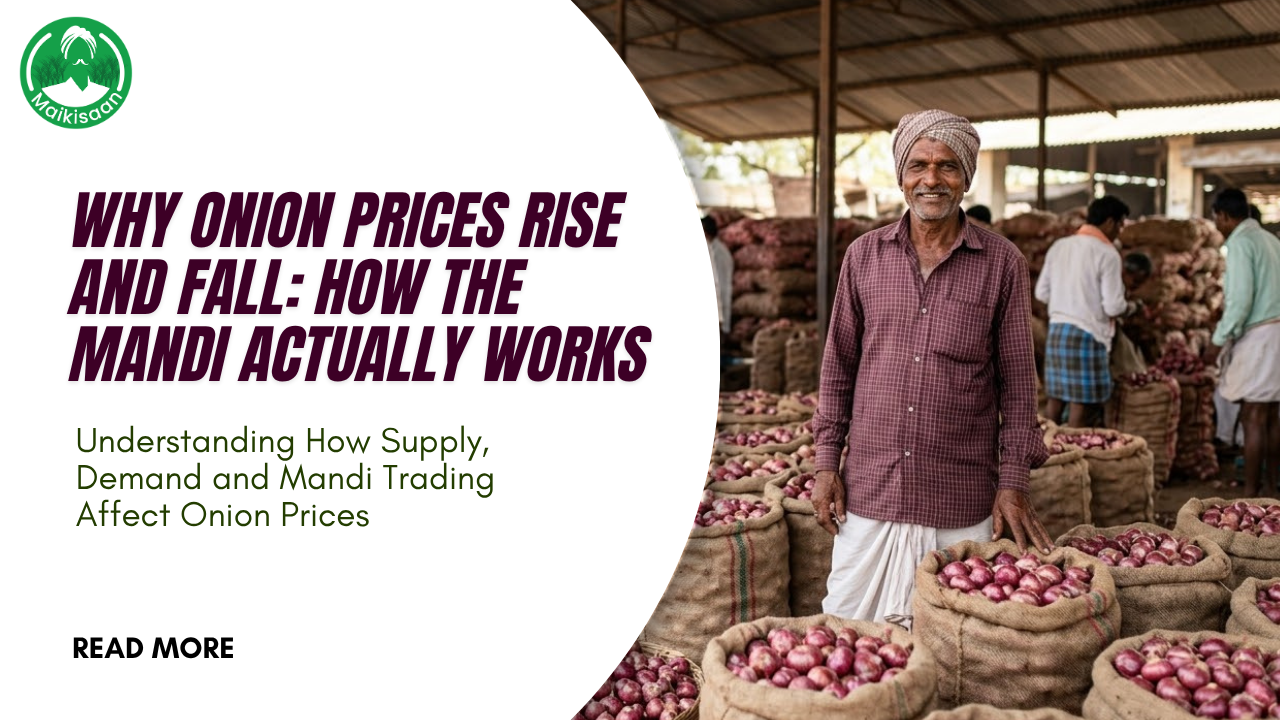 Crop GuidesWhy Onion Prices Rise and Fall: How the Mandi Actually WorksOnion prices depend on four main factors: daily arrivals at mandis, available stored stock, government export policies, and onion quality. Daily arrivals and export decisions can cause sudden price changes, while stored stock influences prices over the longer term. Onion size, freshness, and overall quality also determine the price farmers receive.2 Sep 2026 · 3 min read
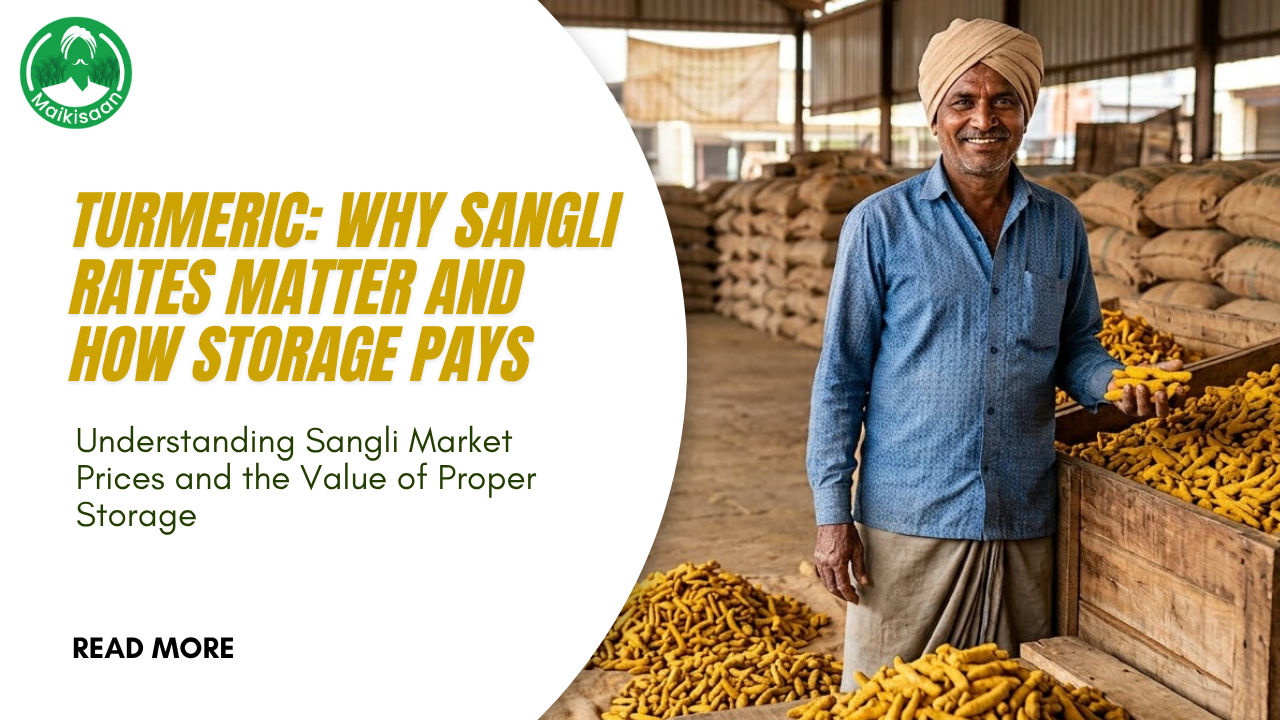 Crop GuidesTurmeric: Why Sangli Rates Matter and How Storage PaysTurmeric is one of the few crops where storage genuinely gives a seller leverage. Dried and stored properly it keeps for a long time without significant loss, so you can wait out a weak market. Sangli and Nizamabad are the benchmark markets traders watch. Curcumin content, polish and colour decide your rate against them.2 Sep 2026 · 2 min read
 Crop GuidesTomato Prices: Why They Crash and What Sellers Can DoTomato is the most volatile crop in the Indian market. It is perishable, cannot be held back, and arrives from several regions at once. A rate can halve in a week when arrivals peak and double just as fast when a crop fails somewhere. Sellers cannot control the swing, but grading, harvest timing and having a buyer arranged before picking all decide where in the range you land.2 Sep 2026 · 2 min read
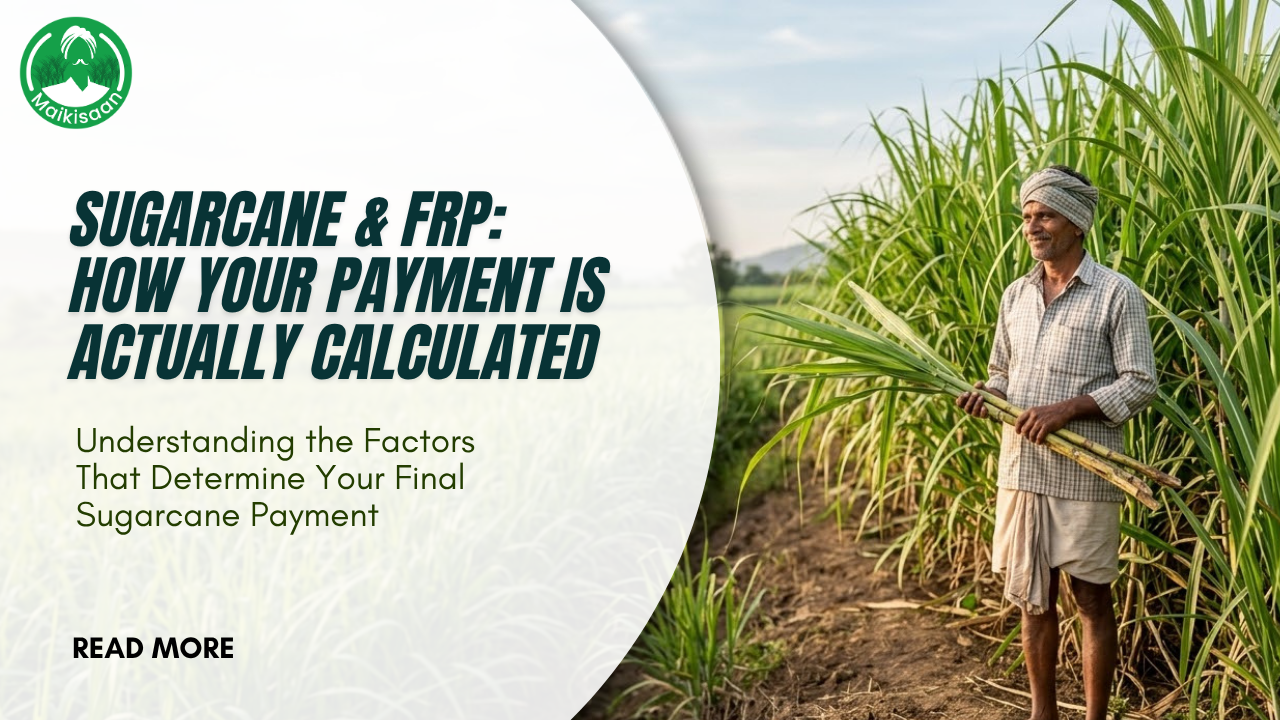 Crop GuidesSugarcane and FRP: How Your Payment Is Actually CalculatedSugarcane is not sold at a mandi rate. The Fair and Remunerative Price is announced by the central government against a base recovery rate, and mills pay more when their recovery is higher than the base. Some states also announce their own higher price. Your payment therefore depends on tonnage, the mill's recovery, and how quickly the mill pays.2 Sep 2026 · 2 min read
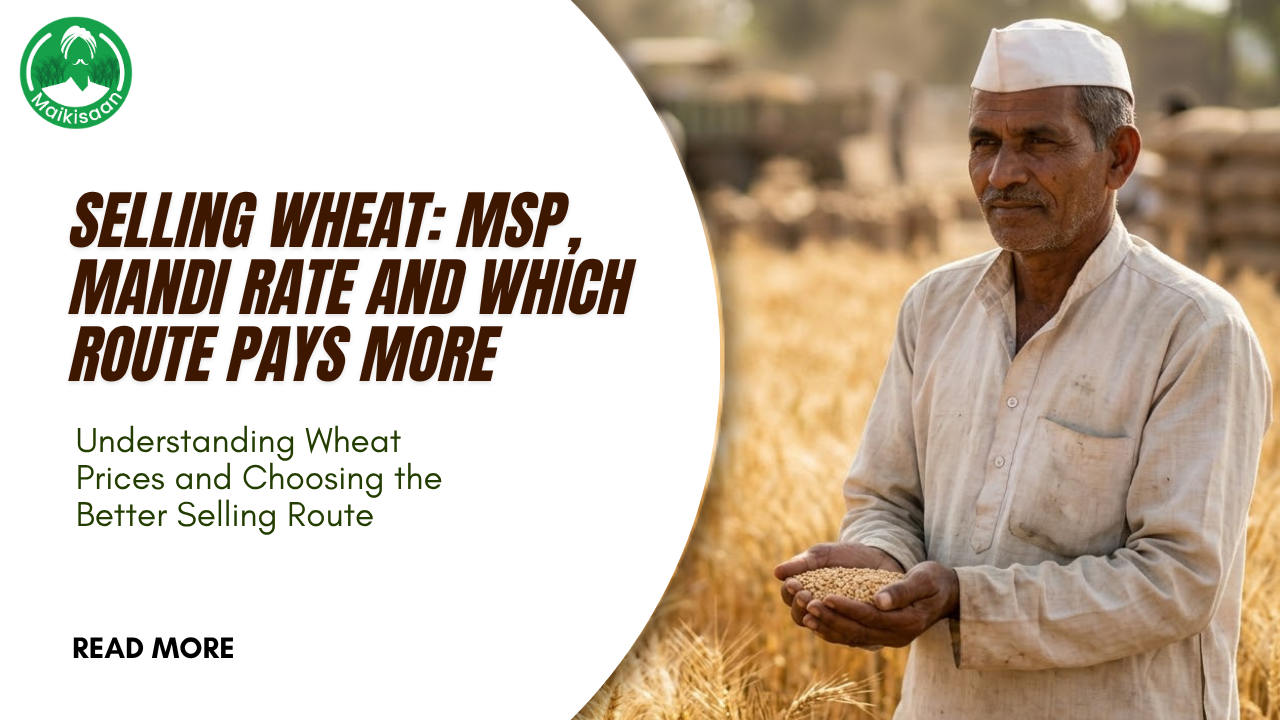 Crop GuidesSelling Wheat: MSP, Mandi Rate and Which Route Pays MoreWheat has two selling routes: government procurement at the announced minimum support price, or the open mandi. MSP guarantees a floor but requires registration, a moisture and quality check, and often a wait for payment. The open mandi pays immediately and can pay above MSP when demand is strong. Which is better depends on your quality, your cash needs and what the local rate is doing.2 Sep 2026 · 2 min read
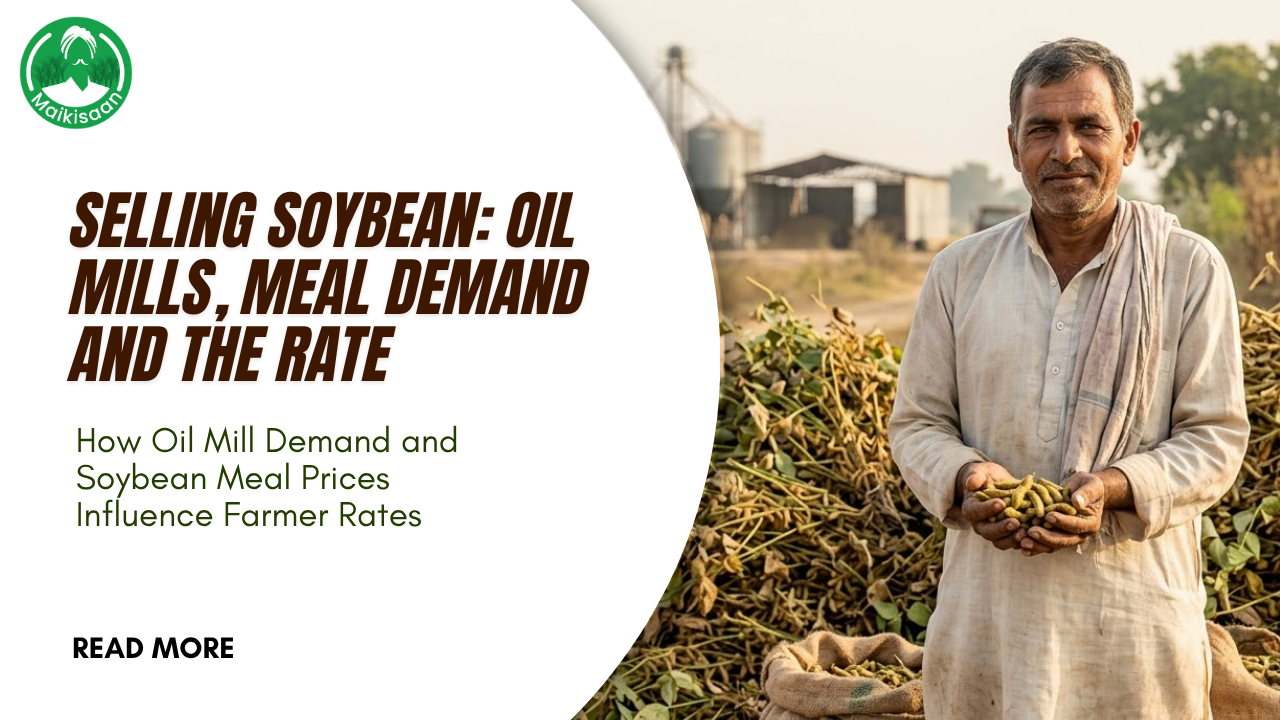 Crop GuidesSelling Soybean: Oil Mills, Meal Demand and the RateSoybean is bought to be crushed, so its rate follows edible oil prices and the demand for soymeal as animal feed, including export demand. That means the rate can move for reasons that have nothing to do with the local harvest. Oil content, moisture and foreign matter decide what you personally receive against that market.2 Sep 2026 · 2 min read
 Crop GuidesSelling Maize: Feed Buyers, Starch Mills and the MandiMaize has more buyer types than most crops. Poultry feed makers, starch mills, ethanol units and the open mandi all buy it, and they value different things. Feed buyers care most about moisture and mould, starch mills about starch content and cleanliness. Knowing which buyer is active near you usually matters more than the headline mandi rate.2 Sep 2026 · 2 min read
 Crop GuidesSelling Cotton: Staple Length, Moisture and Getting a Fair RateCotton is priced on staple length, trash content and moisture, not on weight alone. Buyers are ginners and mills who care about what the lint will spin into. The Cotton Corporation of India buys at MSP when market rates fall below it, which gives a floor in weak years. Clean, dry, well-picked cotton consistently earns above the average rate.2 Sep 2026 · 2 min read
 Crop GuidesSelling Bananas: Timing, Grading and Getting a Better RateBanana cannot be stored, so unlike onion there is no hold-and-wait option. Your rate is decided by bunch weight, finger uniformity, the absence of damage, and how much fruit is arriving that week. Grading before sale and having a buyer lined up before you cut are the two things most within your control.2 Sep 2026 · 2 min read
 Crop GuidesOnion Prices in Maharashtra: When to Sell and When to HoldOnion prices in Maharashtra swing more than almost any other crop. Rates usually fall at kharif harvest when arrivals peak, and rise from February onward as stored stock runs down. Farmers who can store well often earn considerably more, but storage costs money and carries the risk of rot, so the decision depends on your shed, your cash needs and the trend in your own mandi.2 Sep 2026 · 3 min read
Check today's mandi bhav
Prices for 168+ crops, updated every day after 2 PM.