
All Guides
27 guides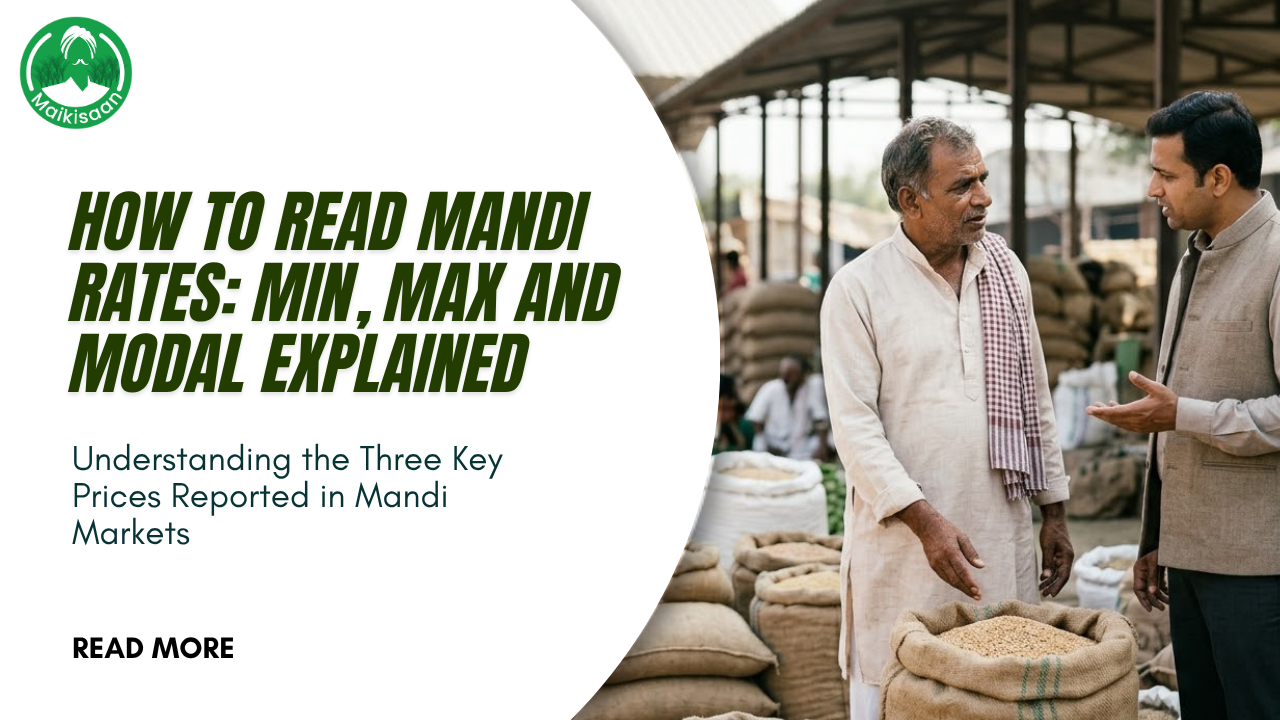 Kheti How-ToHow to Read Mandi Rates: Min, Max and Modal ExplainedEvery mandi reports a minimum, a maximum and a modal price. The minimum is what the poorest lots fetched, the maximum what the best fetched, and the modal is where most trade actually happened. Plan against the modal. The gap between minimum and maximum tells you how much quality mattered that day.2 Sep 2026 · 1 min read
 Kisan YojanaSoil Health Card: Free Soil Testing and How to Use the ResultThe Soil Health Card scheme provides soil testing and a report showing nutrient status and fertiliser recommendations for your field. Testing is available through state soil testing laboratories and Krishi Vigyan Kendras. The value is in acting on the report — most farmers who test never change what they apply.2 Sep 2026 · 2 min read
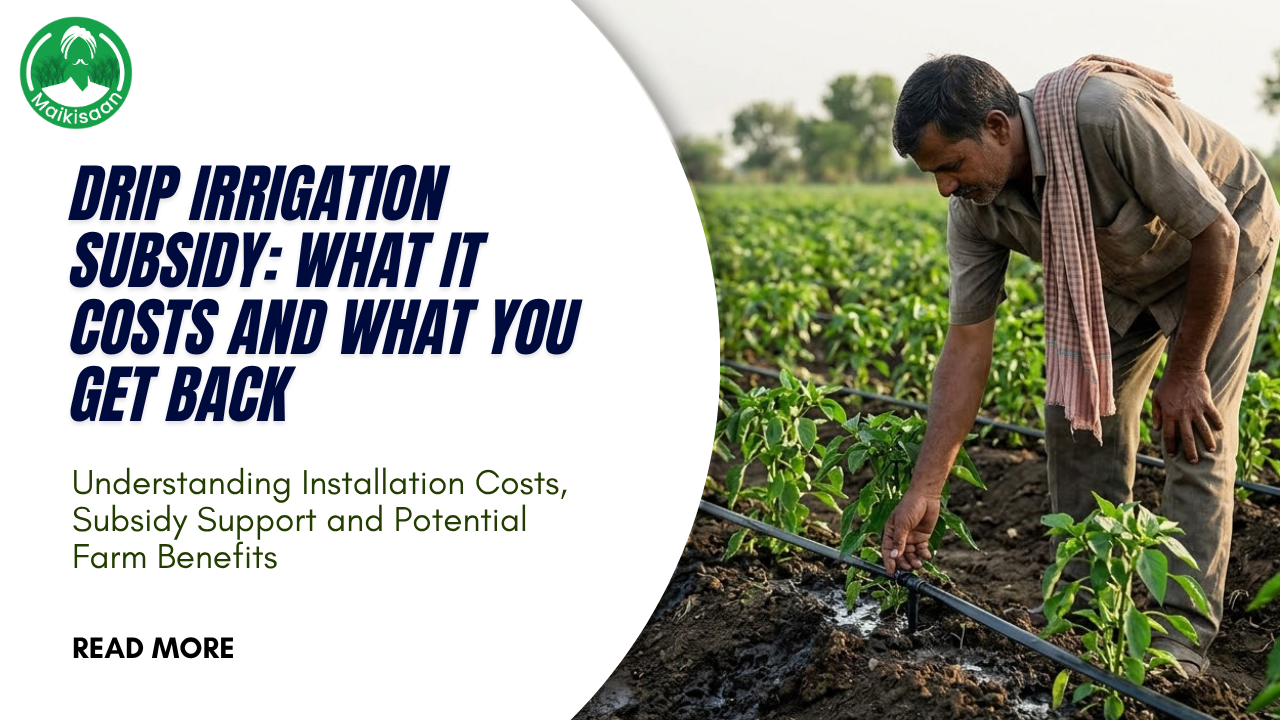 Kisan YojanaDrip Irrigation Subsidy: What It Costs and What You Get BackGovernment support for drip and sprinkler irrigation covers a share of the installation cost, with a higher share for small and marginal farmers. The subsidy is routed through approved suppliers and state agriculture or horticulture departments. Rates and the approved supplier list change, so confirm both before committing to a quotation.2 Sep 2026 · 1 min read
 Kisan YojanaKisan Credit Card: What It Covers and How to ApplyThe Kisan Credit Card gives farmers a short-term credit limit for crop production expenses, drawn as needed rather than as a lump sum. Interest is concessional and prompt repayment earns a further reduction. Limits are set against your land and the crops you grow. Apply through any bank branch or the official portal.2 Sep 2026 · 1 min read
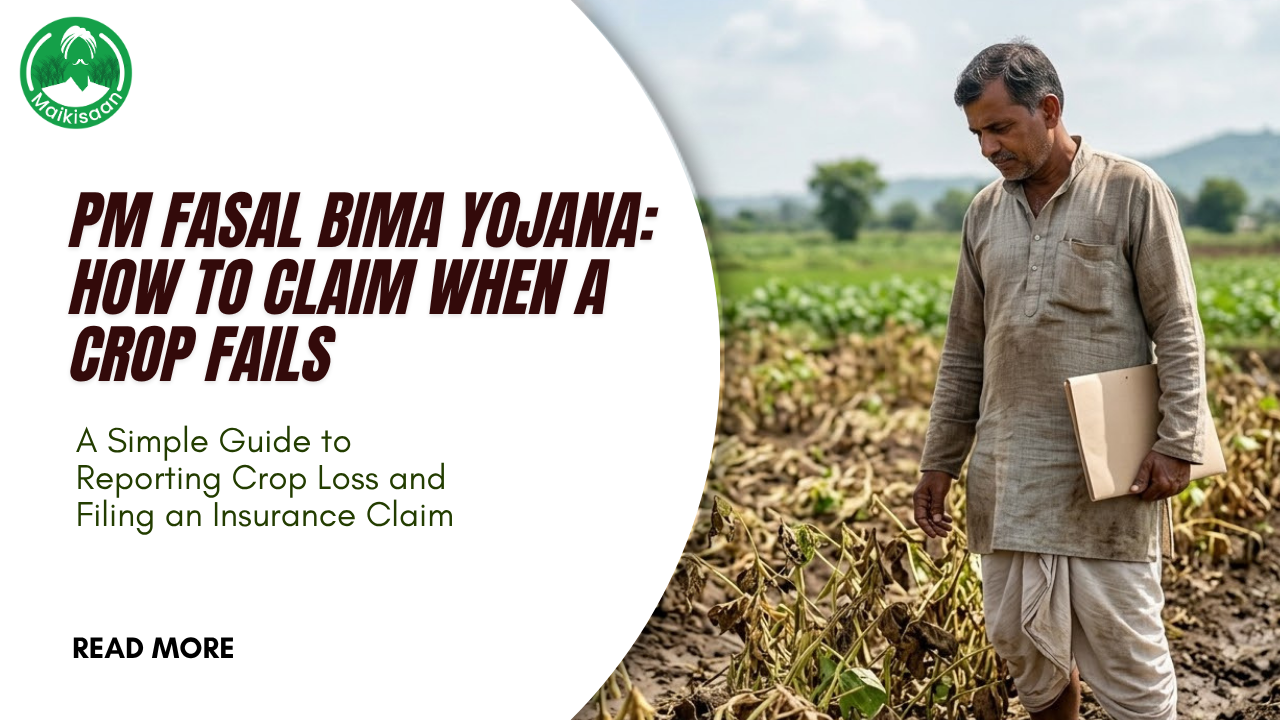 Kisan YojanaPM Fasal Bima Yojana: How to Claim When a Crop FailsPradhan Mantri Fasal Bima Yojana insures notified crops against yield loss from natural causes. Most claims fail on process, not eligibility: the loss must be reported within the stated window, usually 72 hours, and the field must be available for survey. Premium rates and coverage are set per season and per crop, so check the official portal for current figures before enrolling.2 Sep 2026 · 2 min read
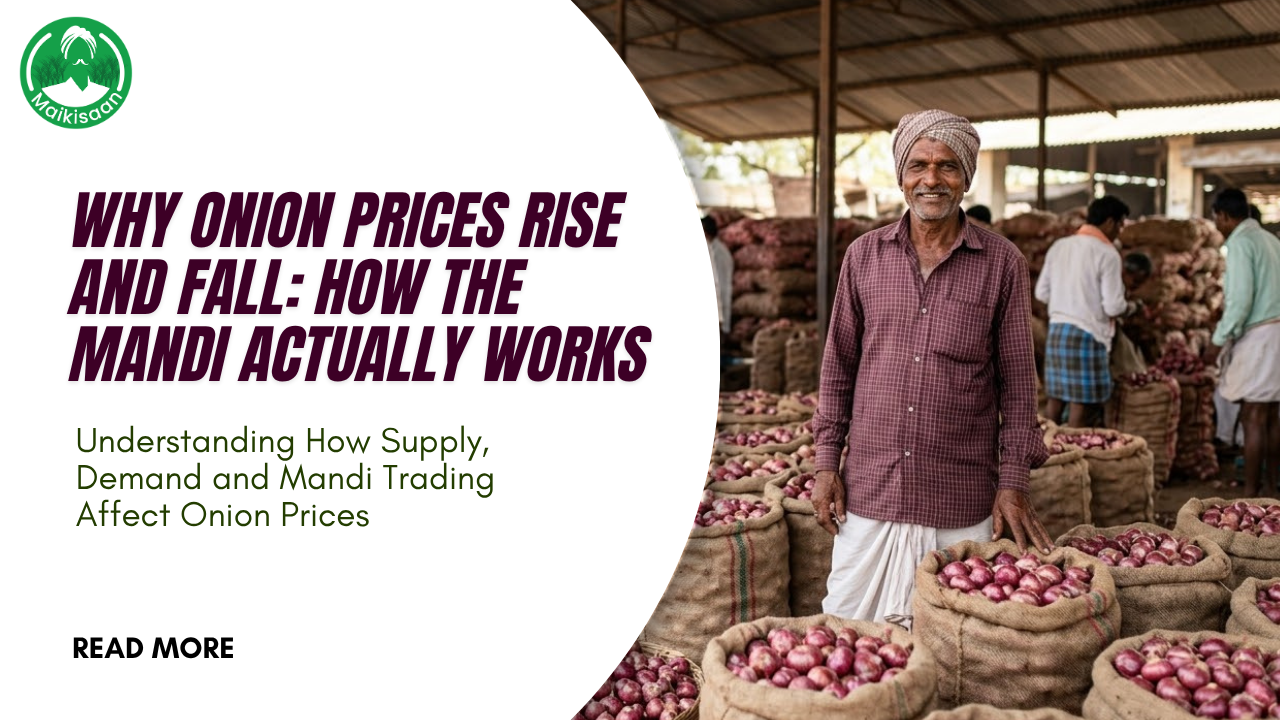 Crop GuidesWhy Onion Prices Rise and Fall: How the Mandi Actually WorksOnion prices depend on four main factors: daily arrivals at mandis, available stored stock, government export policies, and onion quality. Daily arrivals and export decisions can cause sudden price changes, while stored stock influences prices over the longer term. Onion size, freshness, and overall quality also determine the price farmers receive.2 Sep 2026 · 3 min read
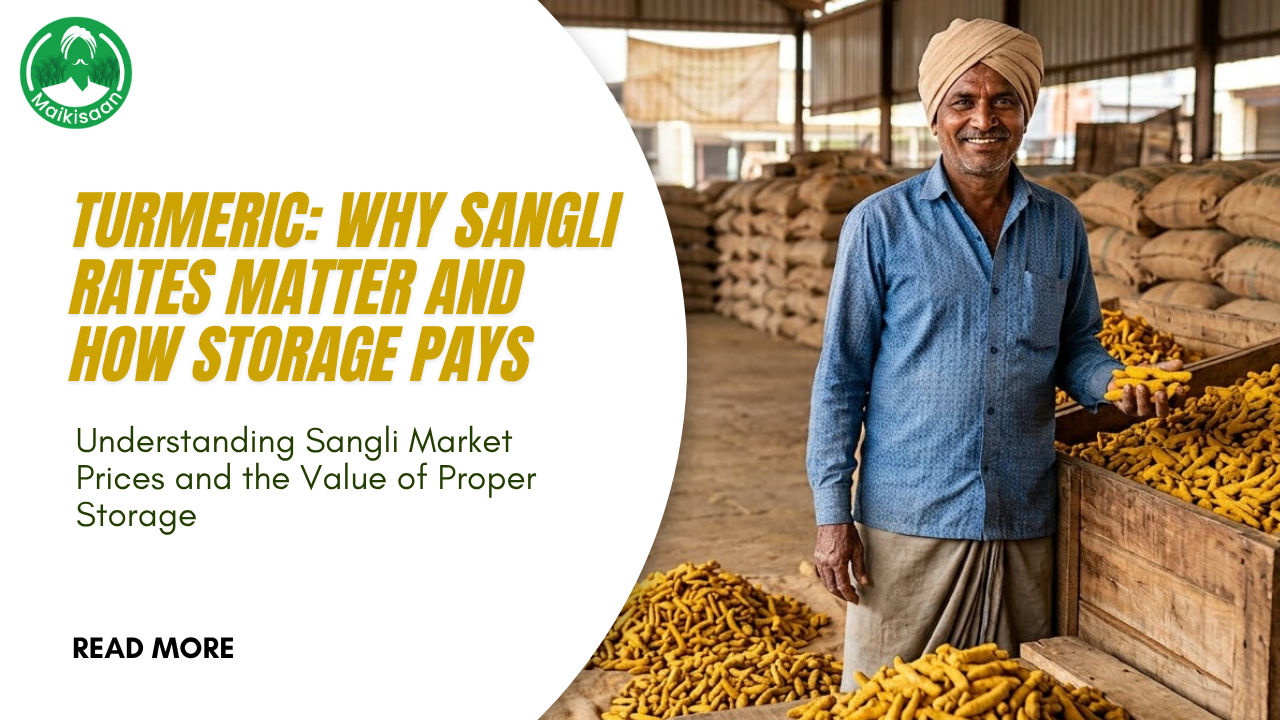 Crop GuidesTurmeric: Why Sangli Rates Matter and How Storage PaysTurmeric is one of the few crops where storage genuinely gives a seller leverage. Dried and stored properly it keeps for a long time without significant loss, so you can wait out a weak market. Sangli and Nizamabad are the benchmark markets traders watch. Curcumin content, polish and colour decide your rate against them.2 Sep 2026 · 2 min read
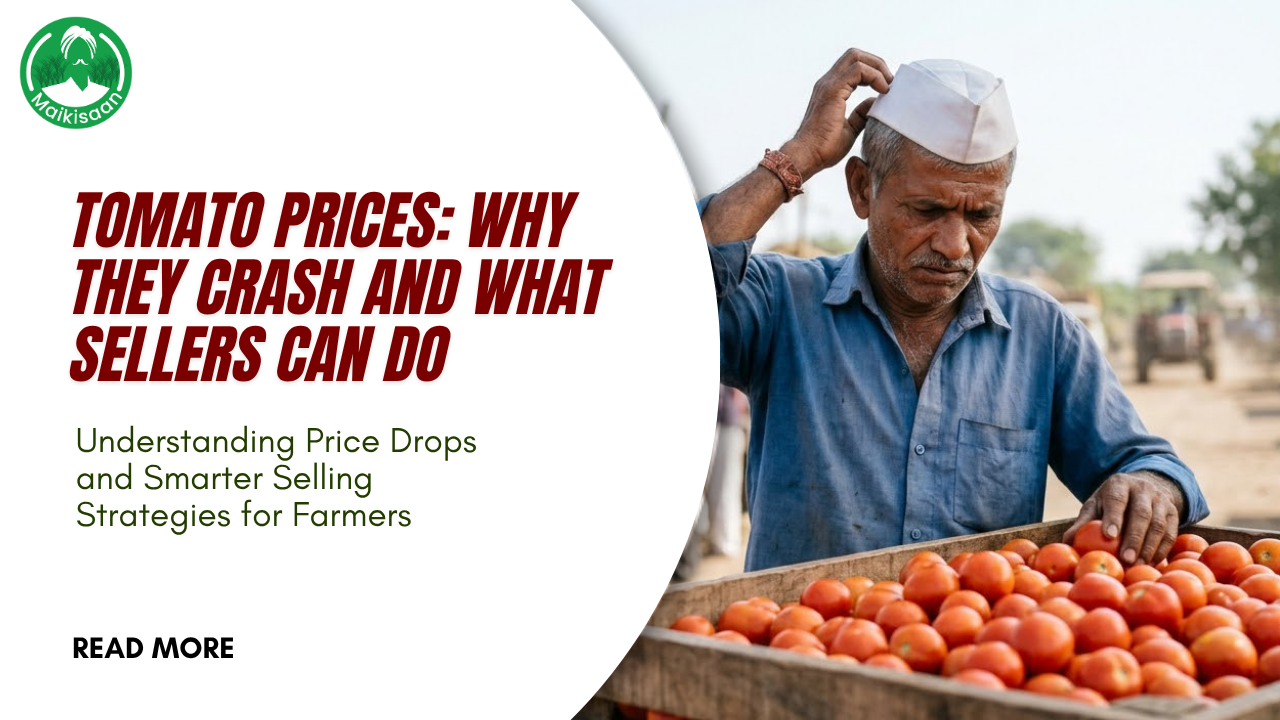 Crop GuidesTomato Prices: Why They Crash and What Sellers Can DoTomato is the most volatile crop in the Indian market. It is perishable, cannot be held back, and arrives from several regions at once. A rate can halve in a week when arrivals peak and double just as fast when a crop fails somewhere. Sellers cannot control the swing, but grading, harvest timing and having a buyer arranged before picking all decide where in the range you land.2 Sep 2026 · 2 min read
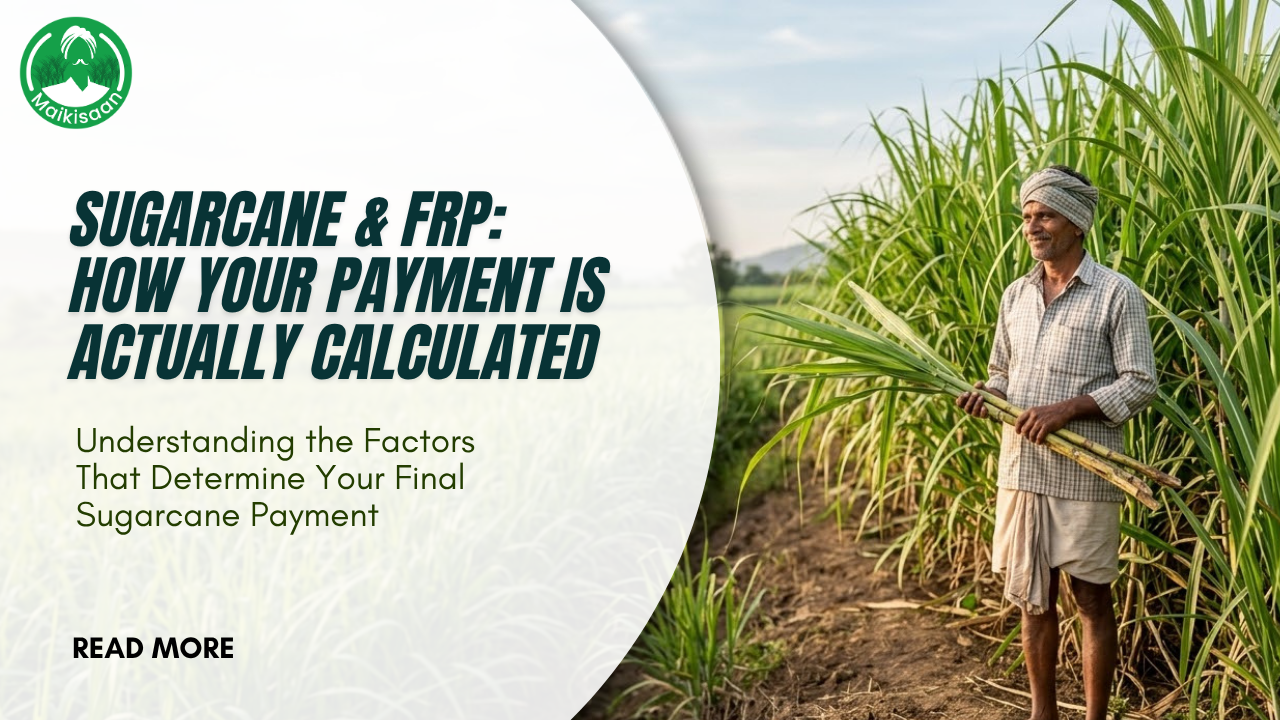 Crop GuidesSugarcane and FRP: How Your Payment Is Actually CalculatedSugarcane is not sold at a mandi rate. The Fair and Remunerative Price is announced by the central government against a base recovery rate, and mills pay more when their recovery is higher than the base. Some states also announce their own higher price. Your payment therefore depends on tonnage, the mill's recovery, and how quickly the mill pays.2 Sep 2026 · 2 min read
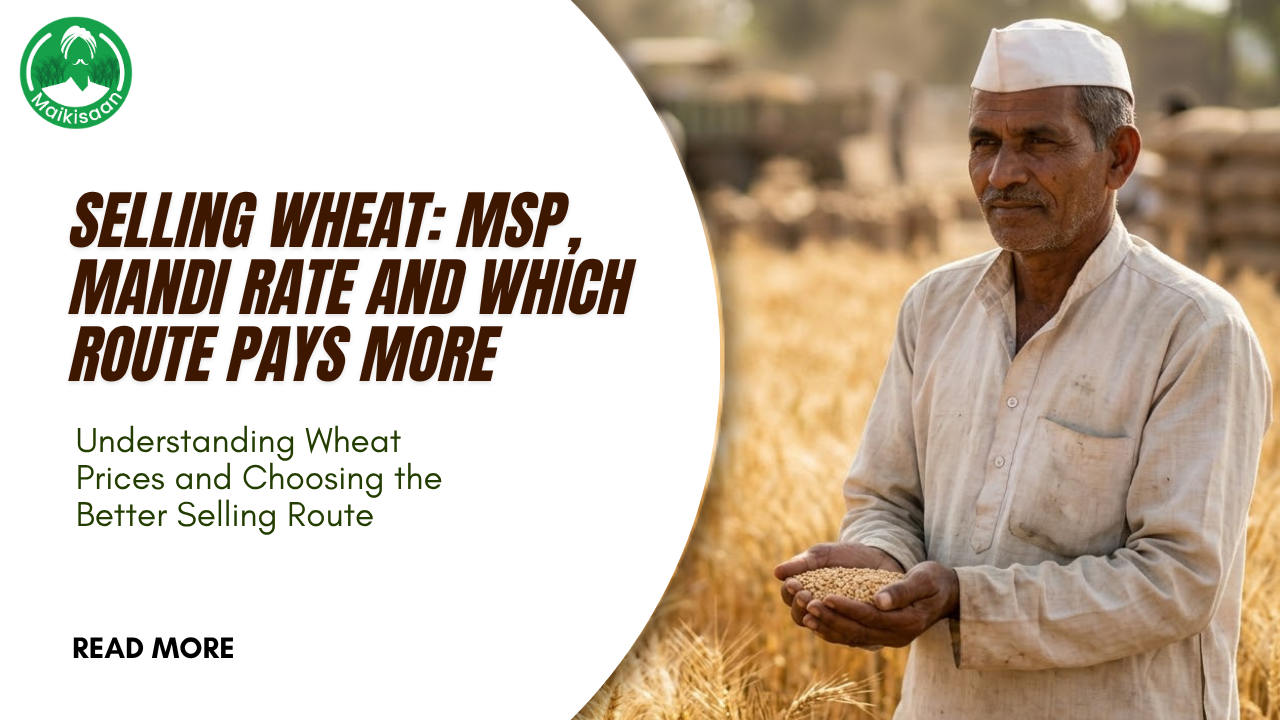 Crop GuidesSelling Wheat: MSP, Mandi Rate and Which Route Pays MoreWheat has two selling routes: government procurement at the announced minimum support price, or the open mandi. MSP guarantees a floor but requires registration, a moisture and quality check, and often a wait for payment. The open mandi pays immediately and can pay above MSP when demand is strong. Which is better depends on your quality, your cash needs and what the local rate is doing.2 Sep 2026 · 2 min read
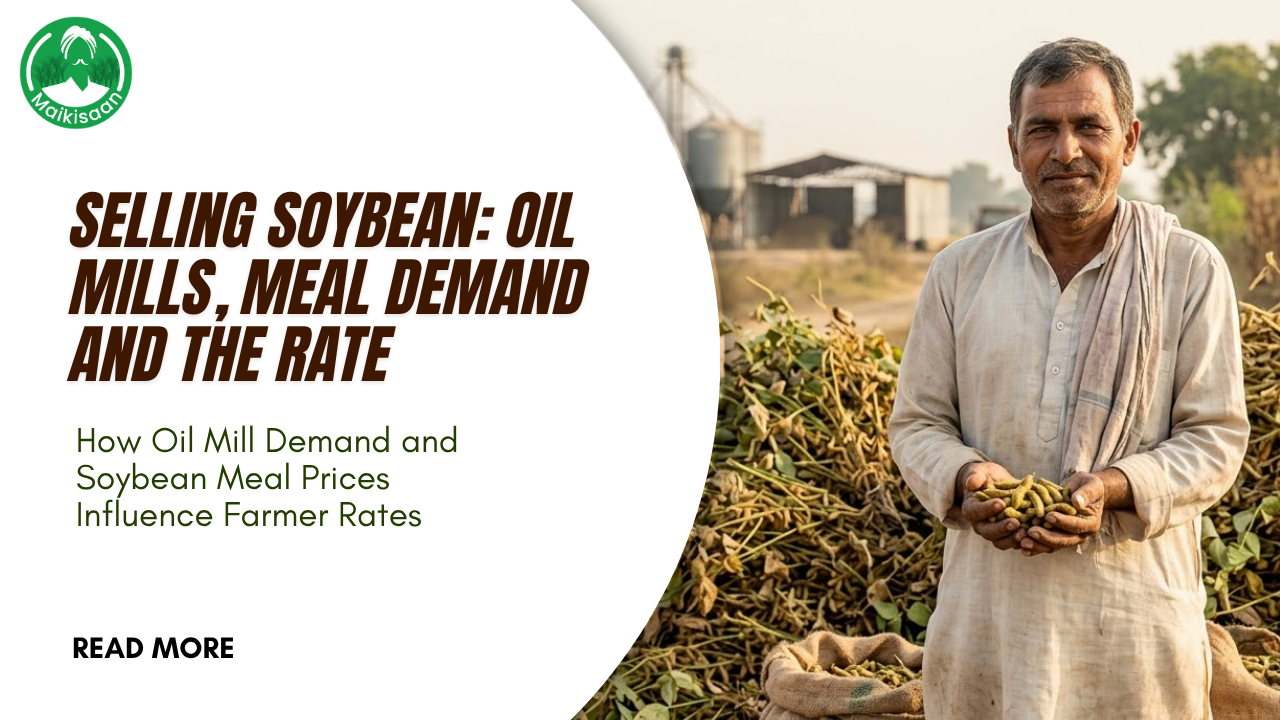 Crop GuidesSelling Soybean: Oil Mills, Meal Demand and the RateSoybean is bought to be crushed, so its rate follows edible oil prices and the demand for soymeal as animal feed, including export demand. That means the rate can move for reasons that have nothing to do with the local harvest. Oil content, moisture and foreign matter decide what you personally receive against that market.2 Sep 2026 · 2 min read
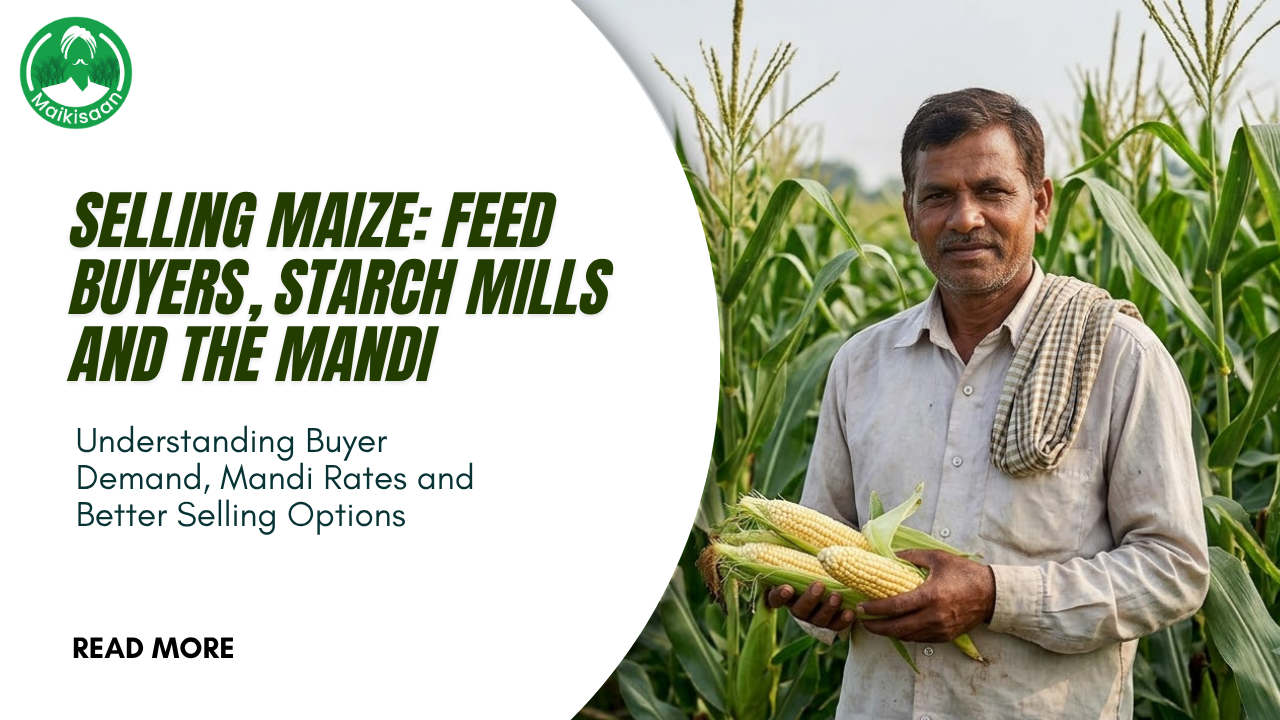 Crop GuidesSelling Maize: Feed Buyers, Starch Mills and the MandiMaize has more buyer types than most crops. Poultry feed makers, starch mills, ethanol units and the open mandi all buy it, and they value different things. Feed buyers care most about moisture and mould, starch mills about starch content and cleanliness. Knowing which buyer is active near you usually matters more than the headline mandi rate.2 Sep 2026 · 2 min read
Check today's mandi bhav
Prices for 168+ crops, updated every day after 2 PM.