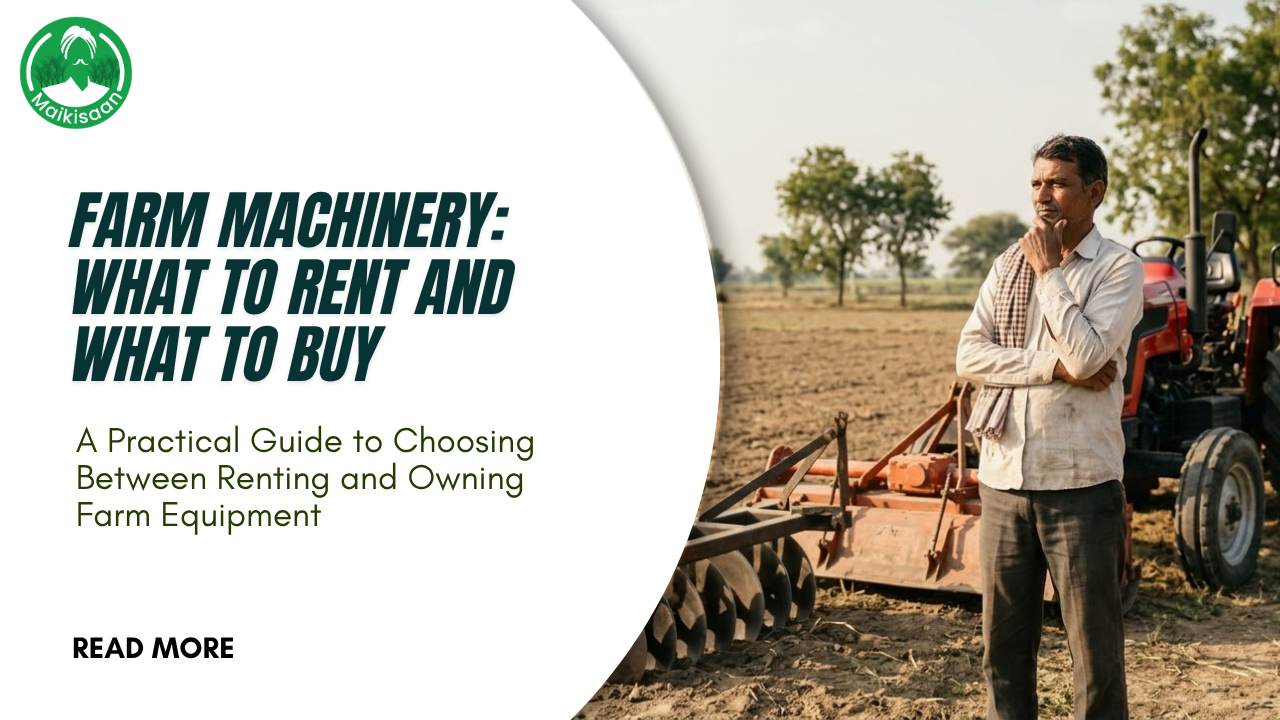
Machinery pays to own when you use it enough days a year to beat the rental cost, including maintenance, depreciation and the capital tied up. Below that threshold, renting is cheaper and carries less risk. Custom hiring centres and shared ownership sit between the two.
Work out your annual usage honestly
The question is how many days a year the machine actually works, not how many days you can imagine using it. Most farms overestimate this considerably. Count the operations it would perform on your acreage and be conservative.
Ownership costs more than the purchase price
Maintenance, repairs, fuel, storage, insurance and the value the machine loses each year all count. So does the capital tied up, which could have gone into something else. A machine that sits idle most of the year is an expensive asset.
Timing is the argument for owning
The real case for ownership is not cost, it is availability. Rented equipment is busiest exactly when everyone needs it, and a few days' delay at sowing or harvest can cost more than the rental saved. Weigh that against the idle months.
Shared ownership and custom hiring
Sharing a machine between a few farms, or using a custom hiring centre, gets closer to owner-level availability at renter-level cost. It requires an agreement everyone honours, particularly about who gets the machine in the busiest week.
| Rent | Share | Buy | |
|---|---|---|---|
| Upfront cost | None | Split | Full |
| Availability when needed | Lowest | Medium | Highest |
| Maintenance burden | None | Shared | Yours |
| Best when | Occasional use | Neighbours with similar timing | Heavy annual use |
| Main risk | Not available on the day | Disagreement over priority | Idle capital |
Frequently asked questions
- How many days of use justify buying?
- It depends on the machine and the rental rate. Compare total annual ownership cost against the rental you would otherwise pay for the same number of days.
- Is a subsidy enough reason to buy?
- No. A subsidy reduces the purchase price but not the maintenance, storage or idle capital. The usage question still decides.