
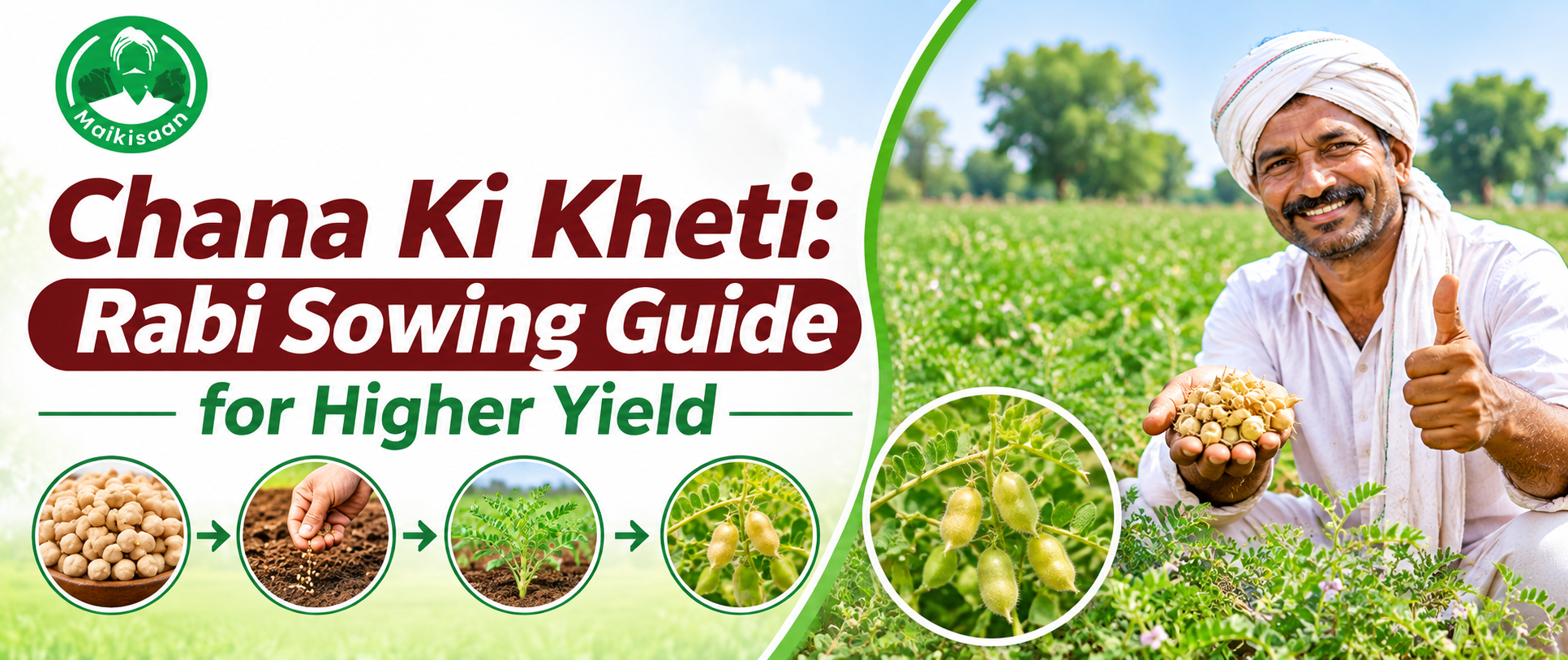
Chana (gram) is a major Rabi pulse crop grown in India. For better production, farmers should choose suitable varieties, sow at the right time, use healthy treated seeds, maintain proper spacing, apply balanced fertilizers, manage irrigation carefully and monitor pests and diseases throughout the growing season.
What you need
- Good-quality, certified chickpea seeds suitable for your region.
- Well-prepared and properly levelled agricultural land.
- Seed drill or traditional sowing equipment.
- Farmyard manure or fertilizers based on soil-test recommendations.
- Access to irrigation, if required.
- Basic farming tools for field preparation and sowing.
- Total time
- P100D
- Estimated cost
- INR 25,000 per acre (approx.)
- 1
Select the Right Chickpea Variety
Choose certified, high-quality chickpea seeds suitable for your region, soil type and climate. Select a variety with good yield potential and resistance to common diseases.
- 2
Prepare the Field Properly
Plough the field and remove weeds, crop residues and unwanted plants. Prepare a loose, well-drained seedbed to support healthy root development and proper seed germination. Avoid fields with waterlogging problems.
- 3
Choose the Right Sowing Time
Sow chickpeas at the recommended time for your region. In central and southern India, the general sowing window is from the first half of October to the first half of November. Avoid unnecessary delays, as late sowing can expose the crop to moisture stress and higher temperatures during pod development.
- 4
Treat Seeds Before Sowing
Use healthy seeds and follow recommended seed-treatment practices to protect the crop from seed-borne diseases. Apply suitable biofertilizer cultures such as Rhizobium and PSB according to agricultural recommendations and product instructions.
- 5
Maintain Proper Seed Spacing and Depth
Prefer line sowing using a seed drill for uniform plant distribution. A commonly recommended spacing is around 30 cm between rows and 10 cm between plants, depending on the variety and local conditions. Follow regional recommendations for sowing depth and seed rate.
- 6
Apply Balanced Fertilizers and Nutrients
Conduct a soil test before applying fertilizers. Use well-decomposed farmyard manure and recommended quantities of nitrogen, phosphorus and other nutrients according to soil requirements. Balanced nutrition supports healthy roots, flowering and pod development.
- 7
Control Weeds at the Right Time
Keep the field free from weeds, particularly during the first 6–8 weeks after sowing. Carry out timely intercultivation or manual weeding to reduce competition for nutrients, sunlight and moisture. Use approved weed-control methods according to local recommendations
- 8
Manage Irrigation Carefully
Chickpea is generally grown as a rainfed crop, but irrigation may be needed when soil moisture is insufficient. Give priority to critical growth stages such as branching and pod formation. Avoid excessive irrigation because waterlogging can damage roots and reduce crop yield.
- 9
Monitor Pests and Crop Diseases
Regularly inspect plants for gram pod borer, wilt, root rot and other common crop problems. Use integrated pest management practices, remove severely affected plants where appropriate and consider recommended biological or approved crop-protection treatments when necessary.
- 10
Harvest, Dry and Store Chickpeas Properly
Harvest when most leaves fall, stems and pods turn brown, and the seeds become hard. Dry the harvested plants properly before threshing. Clean and dry the grains to a safe moisture level before storing them in clean, dry and pest-free storage containers.
Frequently asked questions
- What is the best time to sow chana in India?
- The best time to sow chickpeas in most parts of India is October to November. Timely sowing helps plants establish properly and supports healthy flowering and pod development.
- Which soil is best for chana cultivation?
- Well-drained loamy and clay-loam soils are generally suitable for chickpea cultivation. Avoid waterlogged fields because excess moisture can damage plant roots.
- How much seed is required for one acre of chana?
- Seed requirements depend on the chickpea variety, seed size, spacing and sowing method. Farmers should follow the recommended seed rate provided by their local agriculture department or seed supplier.
- How many days does chana take to grow?
- Chickpea generally takes around 90–120 days to mature, depending on the variety, weather and growing conditions.
- How often should chana crops be irrigated?
- Chickpea is commonly grown as a rainfed crop. Irrigation should be provided when soil moisture is insufficient, particularly during flowering and pod development. Avoid excessive watering.
- Which fertilizers are best for chana farming?
- Chickpea requires balanced nutrients, particularly phosphorus and other essential nutrients. Apply fertilizers according to soil-test results and local agricultural recommendations.
- Which pests commonly affect chickpea crops?
- Gram pod borer is one of the major pests affecting chickpea crops. Wilt and root rot are also common diseases. Regular field monitoring and integrated pest management help reduce crop losses.
- How can farmers increase chana production per acre?
- Farmers can improve chickpea production by selecting suitable certified seeds, sowing at the right time, maintaining proper plant spacing, managing weeds, applying balanced nutrients and protecting crops from pests and diseases.
Read next
- Soil Health Card and Soil Testing
- Chana Mandi Rates
- Chana Sellers
- Chana Buyers
- How to Read Mandi Rate List
- Pulses and Legumes Buy/Sell Enquiries